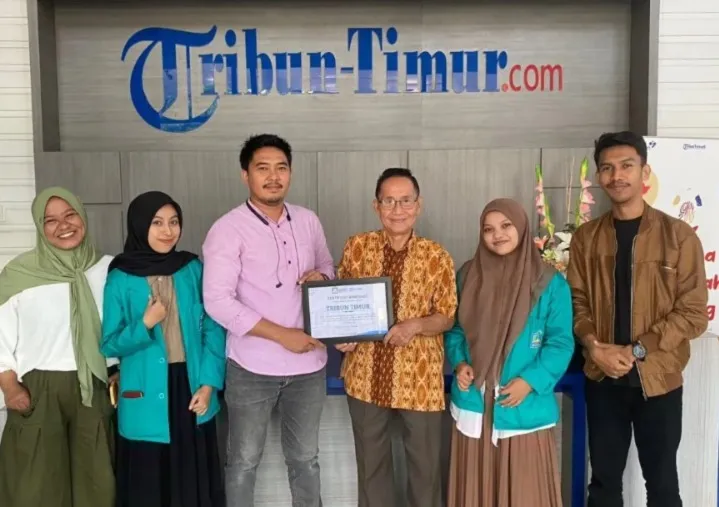
Sumber Foto: iain parepare
Teknologi
Program Jurnalistik Islam Siapkan Lulusan Masuk Industri Media Digital
Public Relations of IAIN Parepare --- The digital media industry continues to grow rapidly and opens wide career opportunities for creative young generations. In response to this challenge, the Islamic Journalism Study Program (JI) at IAIN Parepare presents itself as a strategic program that prepares its graduates to break into and compete in the digital media industry.
As a form of commitment to attract talented, creative, and excellent individuals, the New Student Admission Committee (PMB) of IAIN Parepare opens various pathways for new student admissions, namely the national SPAN–UM PTKIN pathway and the Independent Achievement pathway without tests for the Academic Year 2026. This scheme becomes a golden opportunity for outstanding students who want to develop their careers in the modern media world.
The Head of the Islamic Journalism Study Program, Nahrul Hayat, M. Kom. I., explained that through this pathway, the program he leads will provide opportunities for talented and outstanding prospective students in the fields of content creation, graphic design, photography and videography, sports and arts, as well as academics to register for the JI program through the SPAN pathway and the Independent pathway without tests.
"These two pathways are open for prospective students without tests, and we will facilitate scholarship assistance, such as KIP Kuliah, Baznas, and local government educational assistance in accordance with regulations, especially for prospective students applying to the JI program," said Nahrul Hayat on Monday (February 23, 2026).
"We want to ensure that economic limitations do not become a barrier to obtaining quality education. Young talent must be given as much access as possible. We are ready to help them," he continued with commitment.
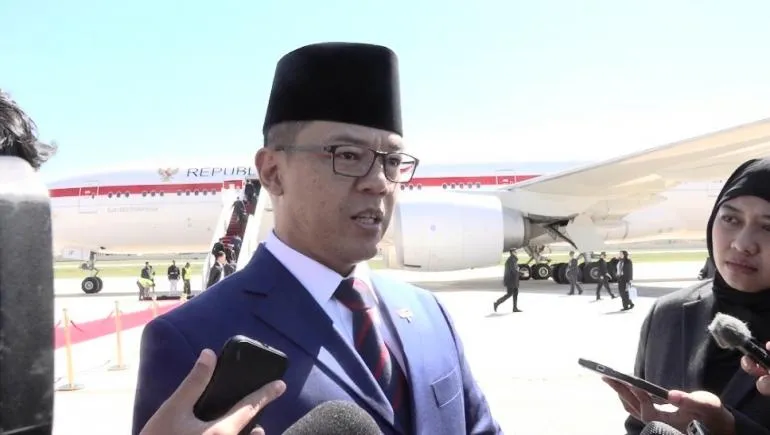
Photo: Head of the JI Study Program, Dean of FUAD, Dr. A. Nurkidam, together with the Deputy Minister of Hajj and Umrah, RI, Dr. H. Dahnil Anzar Simanjuntak in Jakarta.
According to Nahrul, the digital media industry currently needs a generation that is creative, adaptive, and has a portfolio from an early age. Therefore, the Independent Achievement Pathway without tests is opened to provide space for students who have shown interest, talent, and capacity in the fields of media and digital content, arts, sports, and religion (tahfidz).
"This is not just about studying journalism. This is a process of shaping a generation of information movers that enlighten and are competitive in the digital media industry," he emphasized.
The Islamic Journalism program designs a curriculum that is responsive to the dynamics of modern media. Students are equipped with competencies in multiplatform content production, ranging from online news writing, journalistic photography, videography, podcasting, to mobile journalism (MoJo).
The practice-based learning model is the main strength of this program. Students not only study theory in class but also directly produce works and build a digital portfolio from the early semesters.
"We are building a practice-based learning system. Our target is that before graduation, students are ready to enter the newsroom or even build their own digital media," explained Nahrul.
Supported by a digital media laboratory, representative campus facilities, and the Merdeka Learning Campus Merdeka (MBKM) internship program, students gain real experiences that approach industry standards.
"We have a complete media laboratory. Designed to resemble the ecosystem of the modern media industry, it is equipped with professional video and photography production equipment such as DSLR cameras and broadcast video, lighting kits, tripods, gimbals, and even drones for creative visual needs."
This facility, he continued, is also supported by a podcast studio, condenser microphones, audio mixers, and quality recording devices. In the editing room, students use high-spec computers with video editing, graphic design, and news layout software, connected to a Content Management System (CMS) and high-speed internet access.
"In addition, there are mobile journalism (MoJo) devices for smartphone-based content production, teleprompters, and a newsroom simulation room that allows students to practice editorial management professionally. All of these facilities serve as practice-based learning tools that prepare students to compete and break into the digital media industry while still in college," he explained.
The development of the digital economy opens increasingly varied career opportunities for graduates of Islamic Journalism. In addition to becoming reporters and editors, alumni also have the opportunity to pursue careers as professional content creators, social media specialists, video journalists, public relations officers, media strategists, and even digital media entrepreneurs.
"The industry's need for digital communication talent continues to grow. Therefore, we prepare students with strong technical skills as well as journalistic ethics based on Islamic values. Integrity is the main foundation," he emphasized.
Editor: Suherman
in News